Your Home Is Already a STEM Lab. You Just Don't Know It Yet.
Every chore, every project, every "help me with this" moment is a chance to build the six capabilities AI can't replace. No kits. No extra prep. Just one better question while you do what you're already doing.
How It Works
Don't Add to Your To-Do List. Upgrade It.
You're already cooking, cleaning, fixing, organizing, and maintaining a home. Here's how to turn those moments into the most important thinking your child does all week.
Pick a Chore or Project
Laundry, dishes, yard work, groceries, cooking, fixing something broken — anything your family already does together (or should).
Ask One Better Question
Instead of "go do this," ask a question that makes your child think. We give you the exact question for every chore. That's the shift from task to thinking.
Let Them Own the Problem
Step back. Let them figure it out, mess it up, try again. Your job is to be curious, not to correct. That's where the 4Cs + 2Ps come alive.
You don't need to be a scientist, an engineer, or "good at math." You need to stop giving answers and start asking questions. We'll show you how.
This Week's Challenge
The Grocery Budget Problem
You're going grocery shopping. Instead of handing your child a phone, hand them the problem.
Before you leave the house (5 minutes)
Tell your child:
"We have $75 for groceries this week. Our job is to feed the family for the next 5 days. You're in charge of the plan."
Ask:
- "What meals should we make? What do we already have at home?"
- "How do we make sure we don't run out of food before the week's over?"
Have them make a rough list on paper or phone. Don't correct it yet.
At the store (during your normal trip)
Give them the running total responsibility. As items go in the cart, they track the cost.
Ask:
- "We're at $42 and we still need [X]. What do we cut? What do we substitute?"
- "This brand costs $4.29 and this one costs $2.89. What's the difference over a month if we buy this every week?"
- "We've got $8 left. What's the most nutritious thing we can add?"
Let them make the final call on at least 3 decisions.
After you get home (5 minutes while unpacking)
Ask:
- "What surprised you about the prices?"
- "Where did you have to make a trade-off? How did you decide?"
- "If we had $100 instead of $75, what would you change? What about $50?"
- "What would you do differently next time?"
Why this works: This single trip builds Problem-Finding (what meals do we need?), Critical Thinking (which brand and why?), Problem-Solving (staying under budget), Communication (explaining decisions), and math fluency — all without a worksheet or a lesson plan.
Want a new home challenge every Saturday?
One challenge a week, built into something you're already doing. Unsubscribe anytime.
Turn Any Chore Into a STEM Adventure
Pick a chore, tell us about your child, and get a guided 8-phase challenge that builds the six capabilities AI can't replace. Same framework teachers use — written for parents.
What's on your to-do list?
Pick a chore — we'll turn it into a STEM adventure.
The Chore Upgrades
Turn Any Chore Into a Thinking Challenge
Every chore in your home maps to at least two of the 4Cs + 2Ps™. Here's the one question that upgrades each one from a task to a thinking opportunity.
Want a full guided challenge? above — it turns any of these into an 8-phase STEM adventure.
Cooking Dinner
Instead of: "Help me make dinner."
Ask: "We have these 7 ingredients and 30 minutes. What's the best meal you can design?"
Let them plan the meal, read the recipe (or invent one), manage the timing of multiple dishes, and explain their choices to the family at the table.
Doing Laundry
Instead of: "Go sort the laundry."
Ask: "What's the most efficient way to get all of this washed, dried, and folded in under two hours? Design the system."
They're now thinking about sequencing, capacity (how much fits in one load), temperature decisions, and optimization — not just obedience.
Mowing the Lawn
Instead of: "Go mow the lawn."
Ask: "If you were hired to maintain our yard as a business, how would you do it? What would you charge? What's your process?"
They're thinking about pricing, efficiency, quality standards, equipment maintenance, and customer satisfaction. Same mow, completely different brain engagement.
Cleaning a Room
Instead of: "Clean your room."
Ask: "Your room has to work for sleeping, studying, and relaxing. Right now it only works for one of those. Redesign it."
They're space planning, prioritizing, making trade-offs, and defending a design — the same skills an architect or product designer uses.
Grocery Shopping
Instead of: "Come with me to the store."
Ask: "You have the budget. You feed the family for a week. Go."
See this week's full challenge above for the detailed version.
Fixing Something Broken
Instead of: "I'll fix it or We'll buy a new one."
Ask: "Before we replace it, can you figure out what's actually broken and whether we can fix it ourselves?"
Hand them the object, a screwdriver, and YouTube. Let them diagnose, research, attempt a repair, and decide if it's fixable. This is pure engineering thinking.
Planning a Family Trip
Instead of: "We're going to [place]."
Ask: "We have Saturday free, $40, and four people with different interests. Plan a day everyone enjoys."
They're managing constraints, negotiating preferences, budgeting, scheduling, and presenting a plan for group approval. That's project management.
Organizing the Garage
Instead of: "Help me clean out the garage."
Ask: "If we had to find any item in this garage in under 30 seconds, how would we organize it?"
They're designing a system — categorizing, labeling, optimizing for retrieval. Same skills used in data management and logistics.
Washing the Car
Instead of: "Help me wash the car."
Ask: "What's the fastest way to get this car spotless using the least amount of water? Design your process before we start."
They're thinking about efficiency, resource conservation, sequencing, and quality control. Then they execute and evaluate their own plan.
Helping a Sibling with Homework
Instead of: "Help your brother with his math."
Ask: "Your job isn't to give answers. Your job is to ask questions that help them figure it out themselves. Try it for 15 minutes."
Teaching someone else is the highest form of understanding. They're forced to break down concepts, check for comprehension, and adapt their approach — pure FaciliMentor™ skills.
The pattern is always the same: replace the instruction with a question, give them ownership of the problem, and let them think their way through it. That's STEM literacy. It was never about robots.
The Third Core
Schools Teach Two Literacies. Your Child Needs Three.
For over a century, schools have focused on two core literacies: reading and math. Those matter. But AI can now read, write, calculate, and code.
What AI cannot do is find problems worth solving, create something that never existed, or collaborate with others to build something that matters.
Those capabilities — Creativity, Critical Thinking, Communication, Collaboration, Problem-Finding, and Problem-Solving — are what your child needs. We call them the 4Cs + 2Ps™. Together, they are STEM Literacy: the Third Core.
Every chore upgrade on this page is designed to build these capabilities — not someday in a classroom, but today in your kitchen, your yard, and your car.
Creativity
Designing a meal from what's in the fridge. Inventing a new way to organize a closet.
Critical Thinking
Comparing brands at the grocery store. Deciding what's actually broken before buying a replacement.
Communication
Explaining their yard work plan. Teaching a sibling. Presenting a family trip itinerary.
Collaboration
Splitting chores efficiently. Planning a day that works for everyone. Negotiating trade-offs.
Problem-Finding
Spotting the real reason snacks disappear. Noticing the garage system doesn't work.
Problem-Solving
Staying under a grocery budget. Fixing a broken shelf. Designing a car-wash process.
Assess
Is Your Child STEM Literate?
Answer 12 quick questions about your child's everyday behaviors. Get a personalized STEM Literacy snapshot — with specific chore upgrades to strengthen each capability.
Takes about 2 minutes. No account required.
Go Deeper
The Book That Explains Why — And What To Do About It
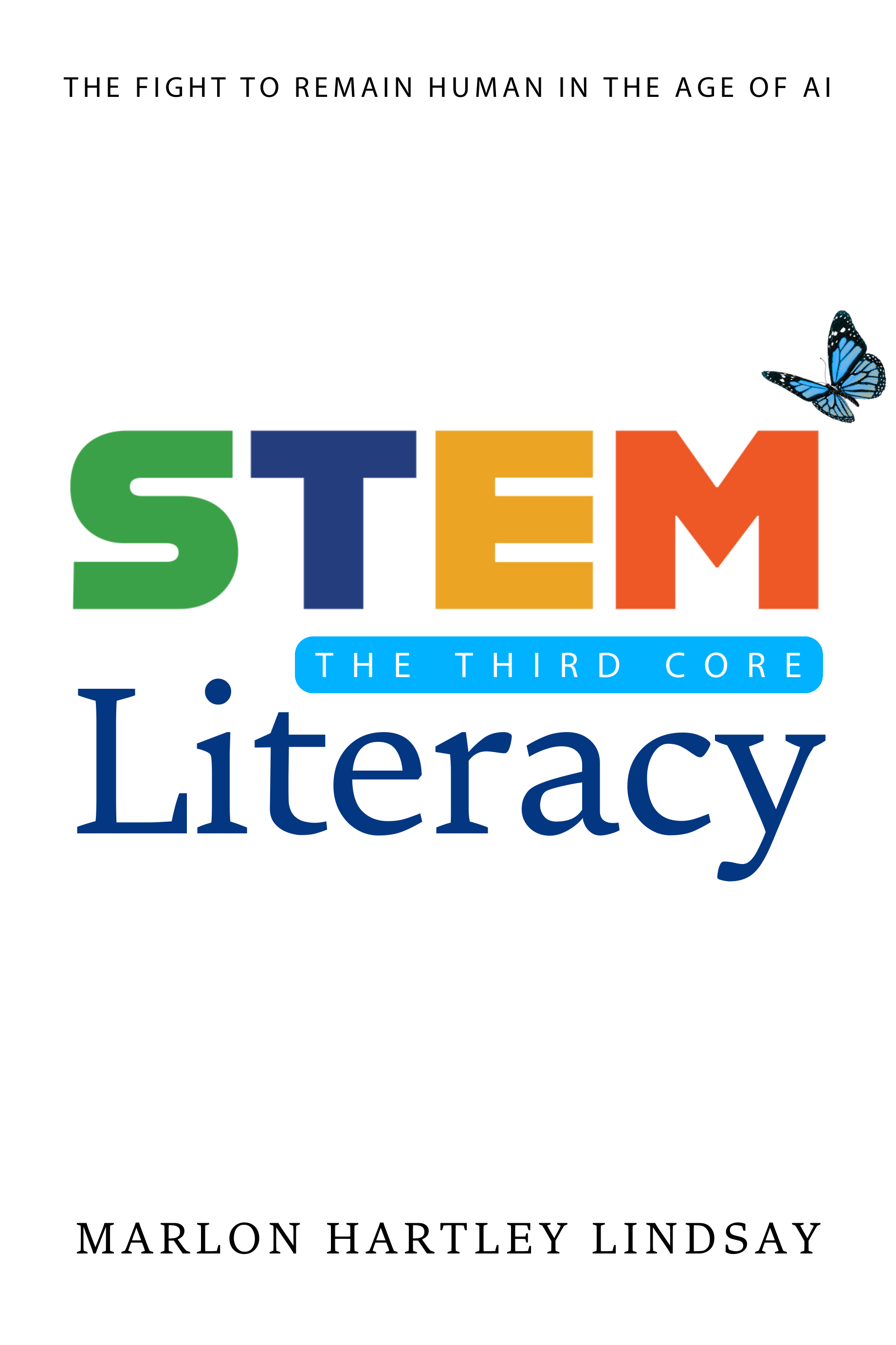
STEM Literacy: The Third Core — The Fight to Remain Human in the Age of AI is for educators, parents, and anyone who believes learning should prepare children for the world they'll actually live in.
Coming Summer 2026.
Make It Systemic
What You Do at Home Is Powerful. What Your School Can Do Is Transformational.
The same framework behind these chore upgrades — the 4Cs + 2Ps™, the 8-phase learning cycle, the STEM Literacy OS™ — is available to schools and districts through 21stCenturyEd.
Ask the Question
"How is our school developing students' creativity, critical thinking, and problem-solving — systematically, not just incidentally?"
Connect Us
If they're interested, we take it from there.
One Chore. One Question. Every Saturday.
Get a weekly chore upgrade that turns something your family already does into the most important thinking your child does all week.